EpiLog
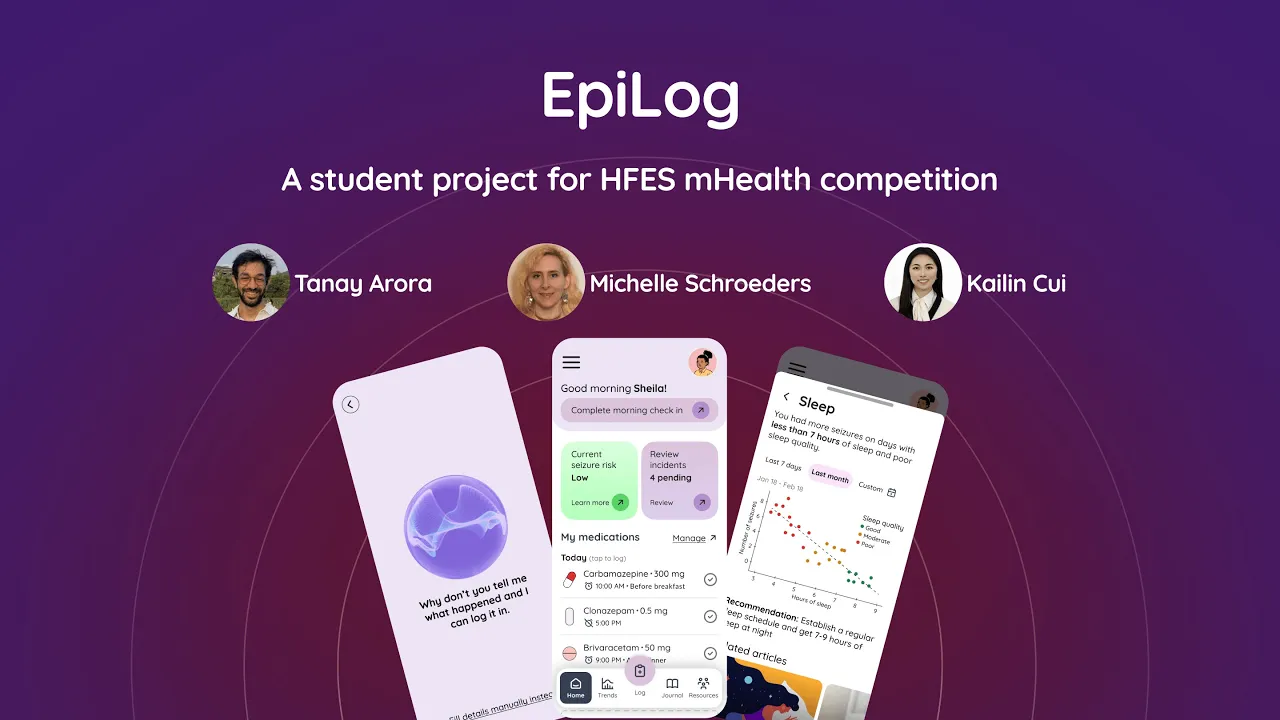
This was an end-to-end mobile healthcare design competition that lasted for 3 months. We were judged based on our research, the problem solving and final design output.
This project was quite intense and taught me how to combine academic research with UX research to inform product decision, dealing with sensitive topics while conducting research and an understanding of FDA regulations.
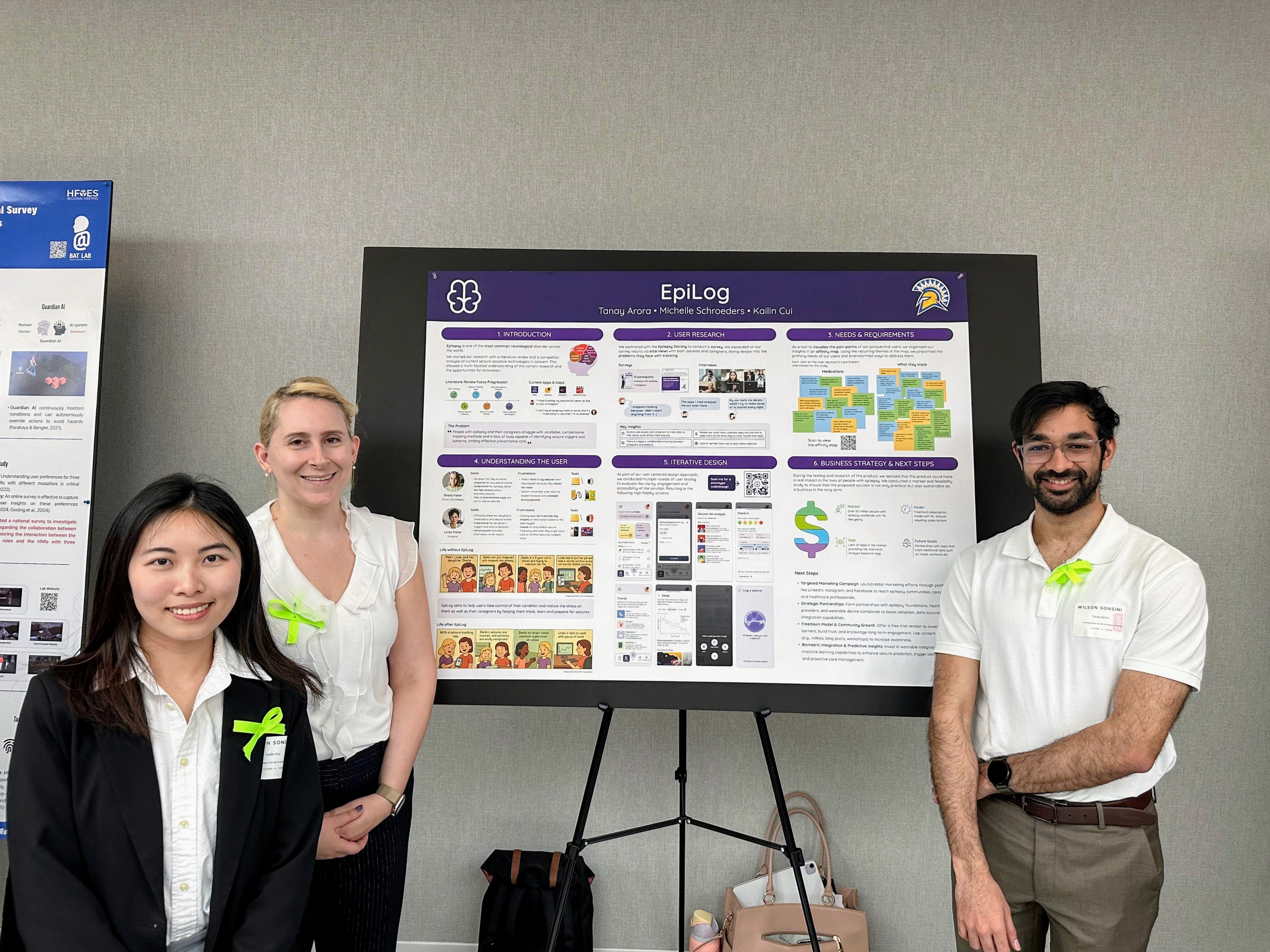
Presenting our poster at a conference
Video of our final presentation at HFES Healthcare
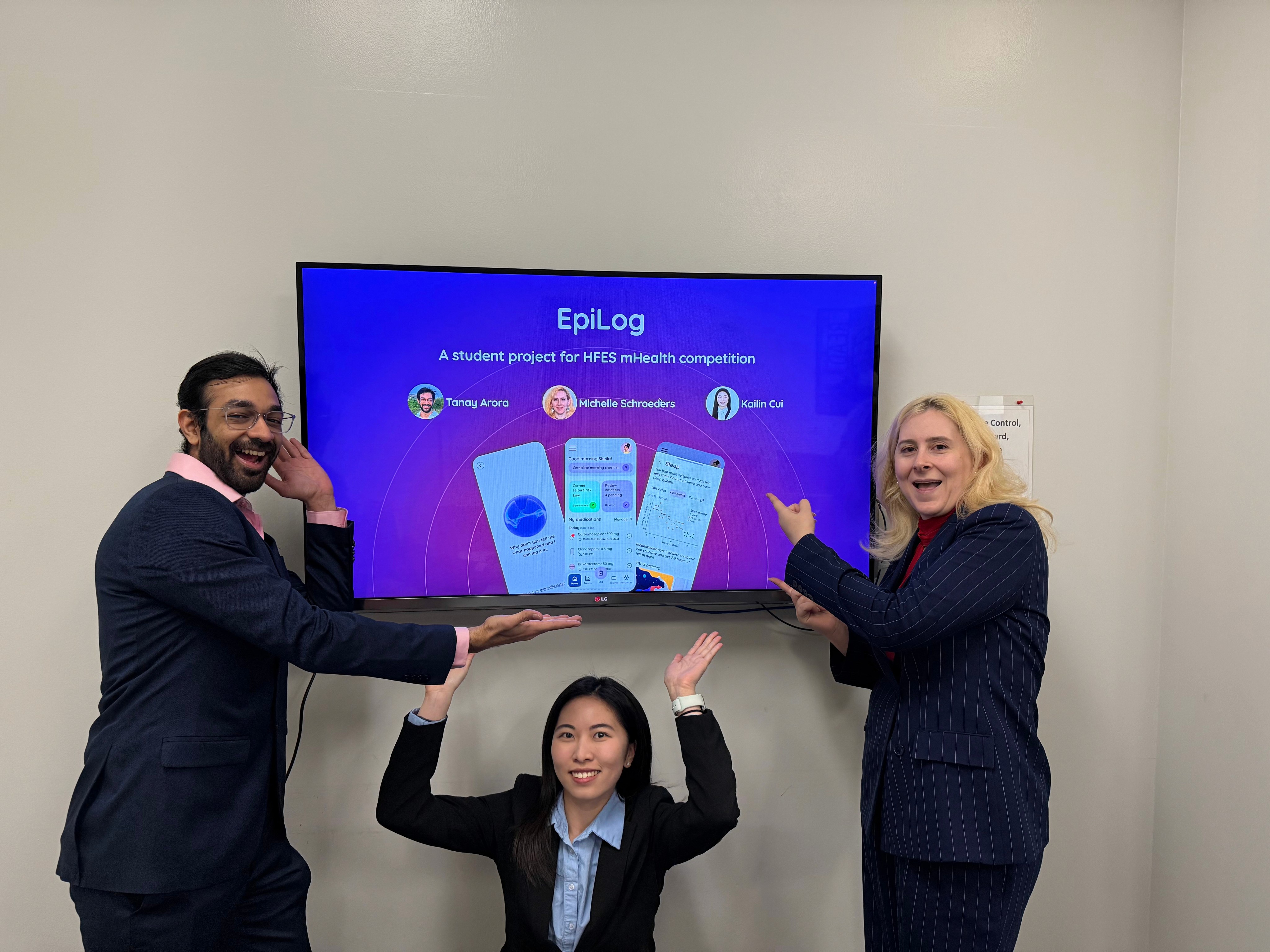
Random winner photo op with the team
Research
Methodology
Academic research
Epilepsy is a common neurological disorder that affects millions of people every day. Seizures are nearly impossible to predict and can happen at any time. People who suffer from seizures, their caregivers, and their neurologists struggle to track, evaluate, and understand seizures. The ultimate goal in tracking and understanding seizures is to identify the triggers for preventative care.
Existing market of apps
While there are a wide range of apps on the market, an analysis of online forums as well as reviews of these apps showed a general dissatisfaction amongst the user base about their effectiveness and usability.




Contextual inquiry
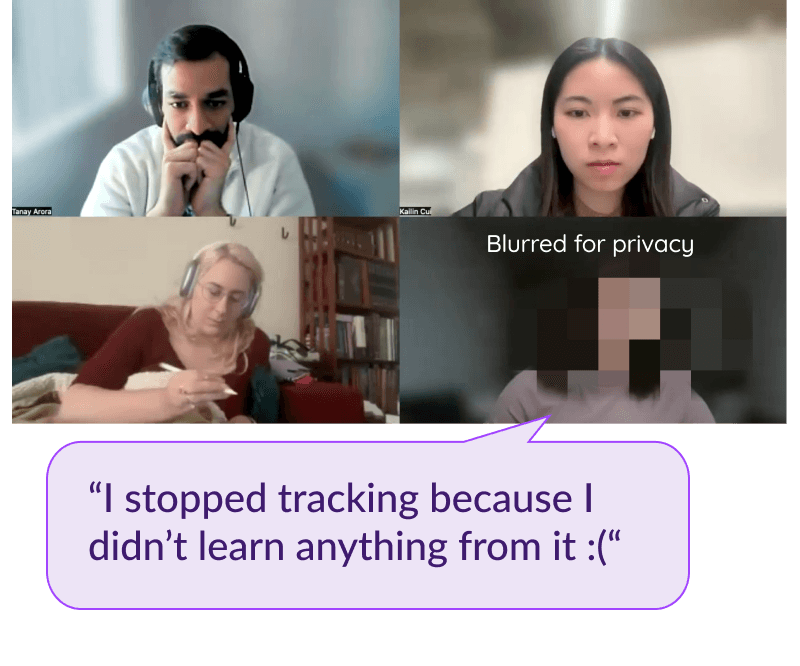
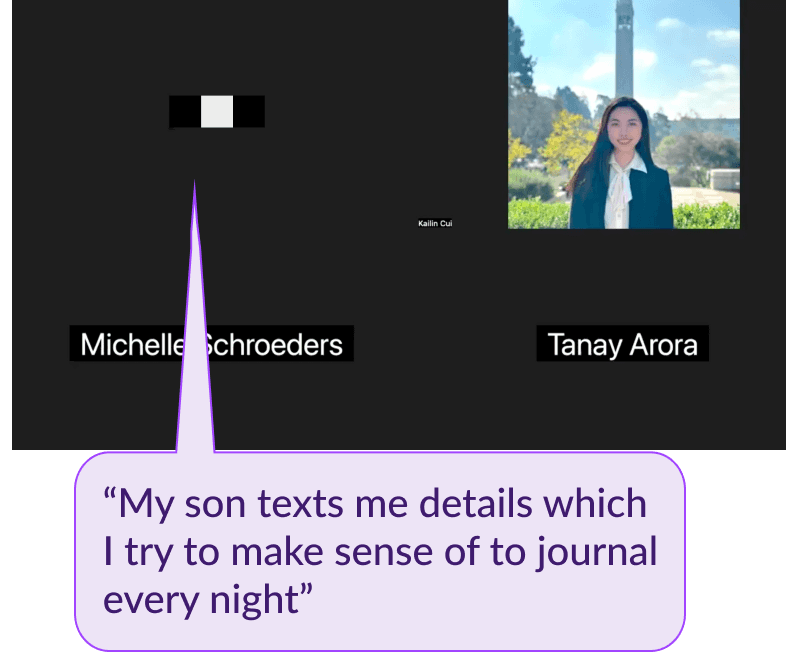
We partnered with the Epilepsy Society to conduct a survey with 21 participants and further expanded on our findings via semi structured interviews with both patients and caregivers, diving deeper into the problems they face with tracking.
Affinity mapping
We categorized our interview notes into topics to find recurring themes to understand the issues that people with epilepsy and their caregivers were commonly facing.

Research
Takeaways
Key insights
There's lack of verified resources to learn about seizures which leads to people relying on misinformation
There is a lapse in collaborative tracking between caregivers and patients
People use voice notes, calendar apps and journals to keep track of info since they’re more flexible than apps
Doctors ask people and caregivers to track data to infer about what affects their seizures. Since peoples triggers, effects and
Problem statement
People with epilepsy and their caregivers struggle with unreliable, cumbersome tracking methods and a lack of tools capable of identifying seizure triggers and patterns, limiting effective preventative care.
Design
Process
User Personas
Since epilepsy often manifests at a really young age, there's two primary personas: one of a caregiver and one of the person with epilepsy


Journey mapping
Using Donna Lichaw's structure from The User's Journey, we created a journey map to understand different aspects of a user's interaction with our potential app.

Requirement defining
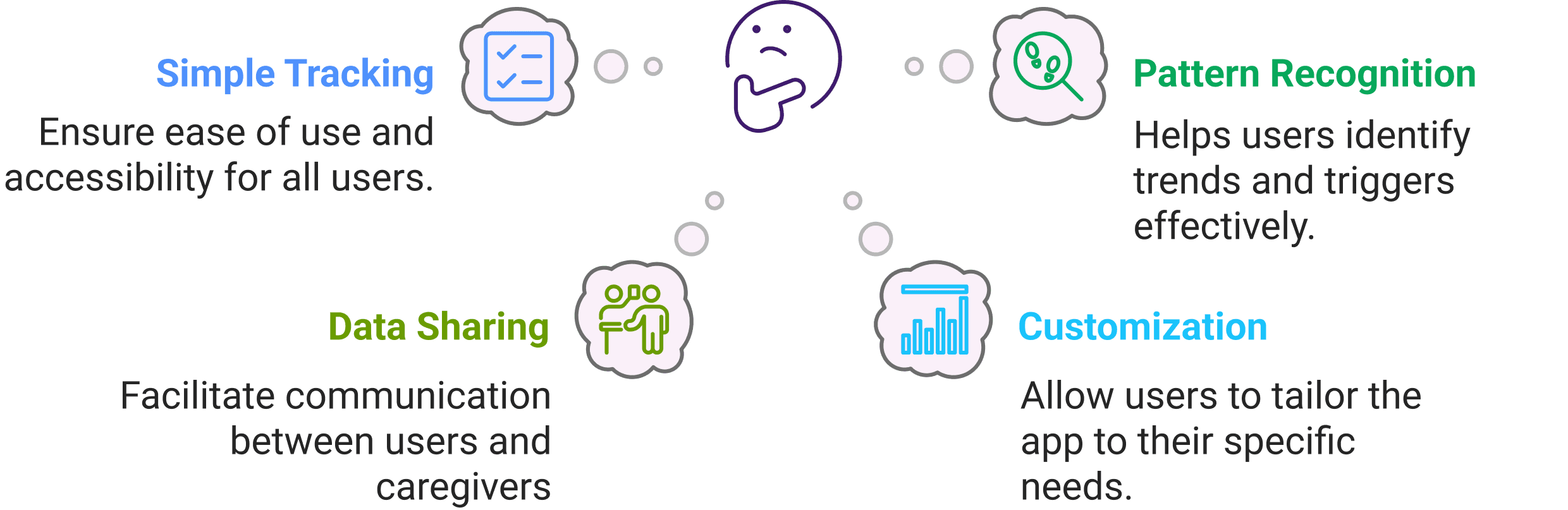
Guided by a user personas, journey and valuable insight from our research, we found that users wanted simple reliable seizure tracking with pattern recognition and trigger insights. They wanted to share data with caregivers, customize what they track, and avoid complex inputs.
Brainstorming concepts
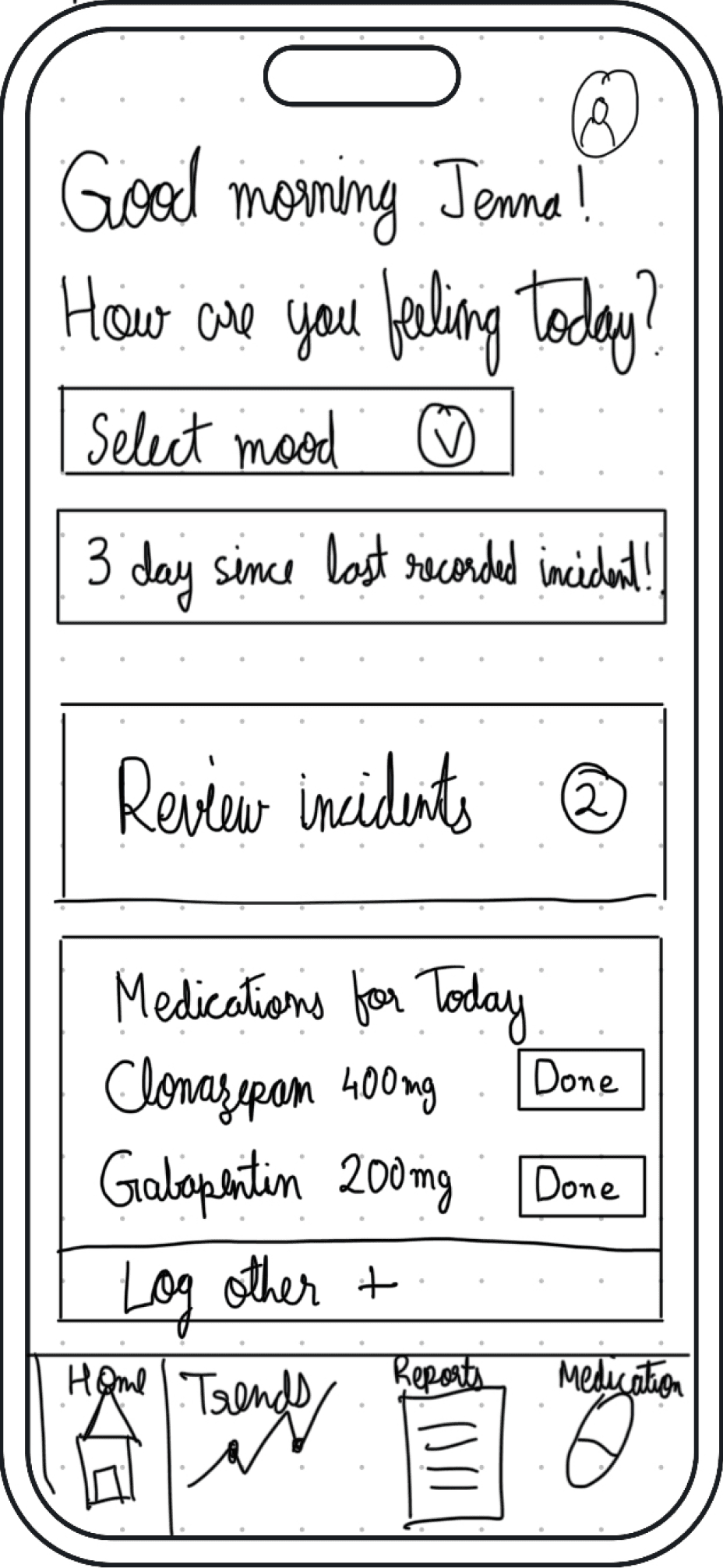
Using card sorting and task prioritization, we came up with an information architecture for a solution that addresses the user pain points, keeping them at the centre of our design

User
Interface
Iterative design
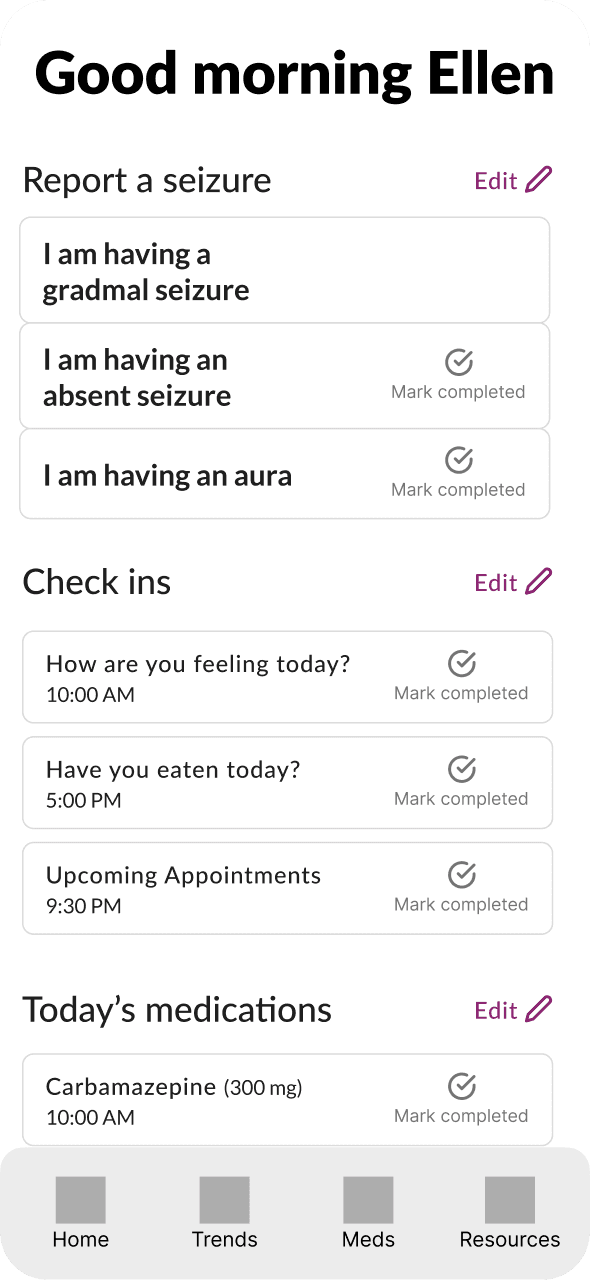
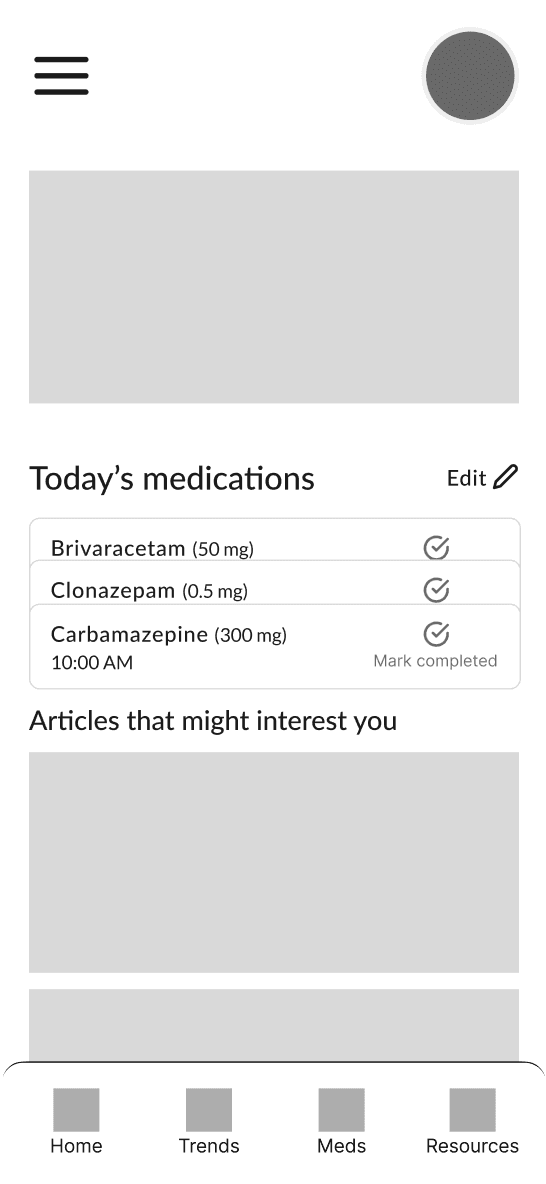
To ensure that user insights were being accurately translated into the design, we conducted multiple rounds of testing early in the design process with stakeholders

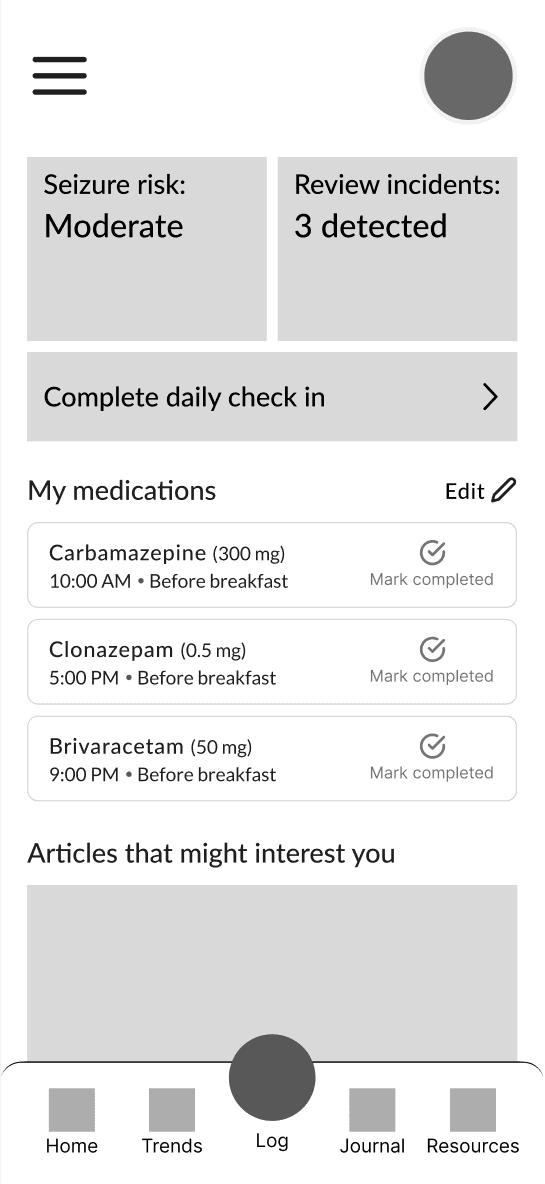
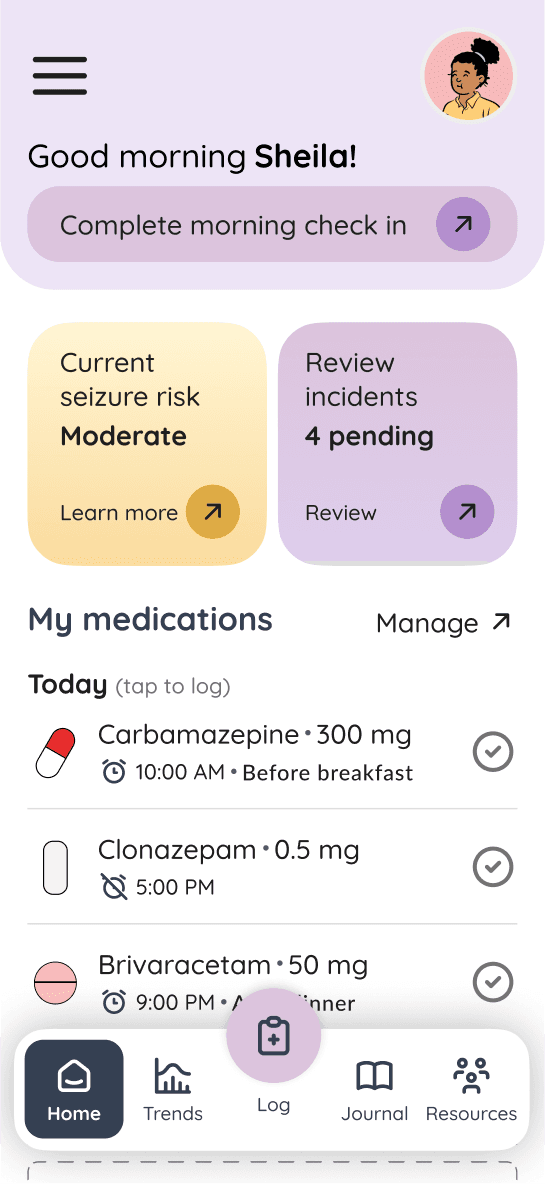
Validation
We conducted moderated user testing sessions with previously interviewed participants as well as new ones, to test concepts and wireframes

DESIGN
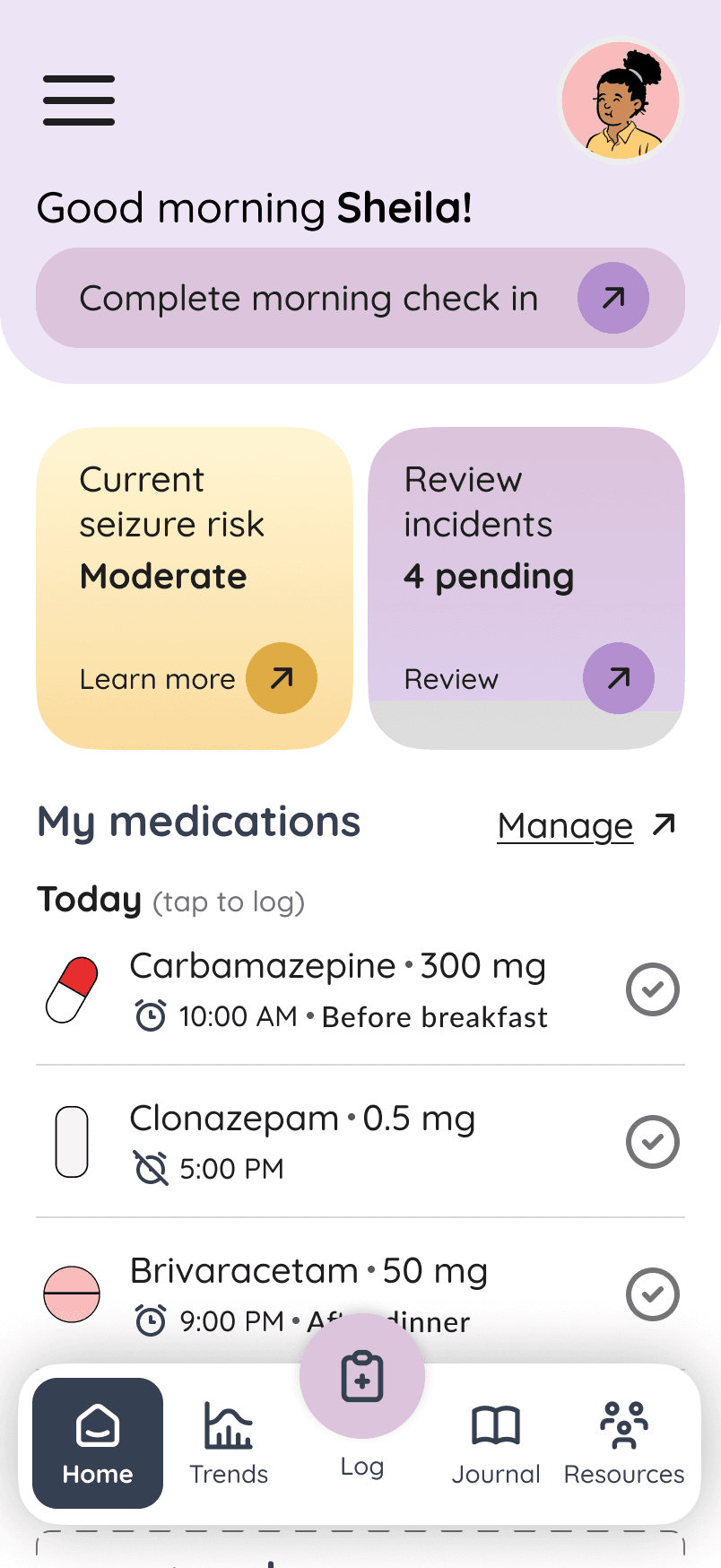
Home
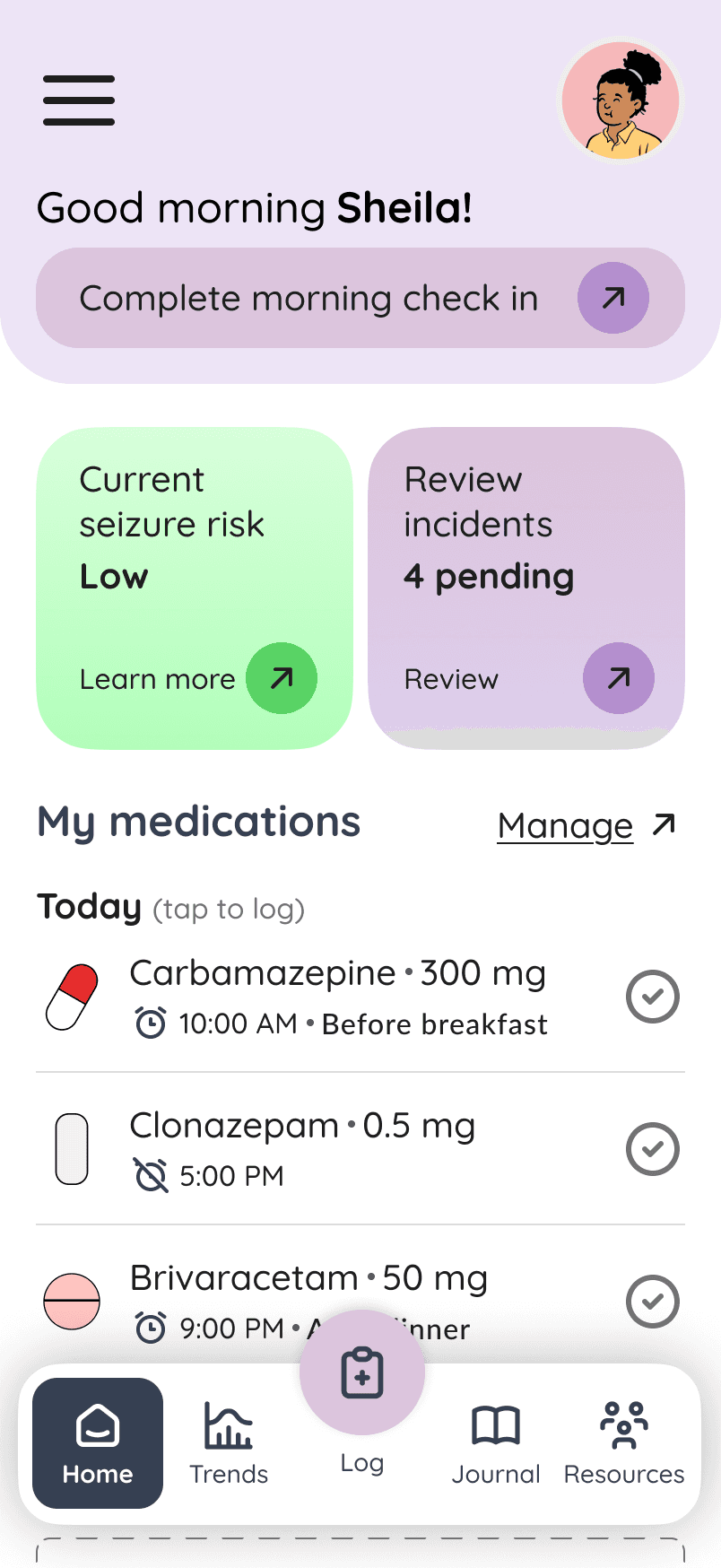
The homepage focused on logging data, providing a seizure risk score to understand current risk based on logged data, reviewing any seizure-like activity recorded by wearables and medications at a glance
DESIGN
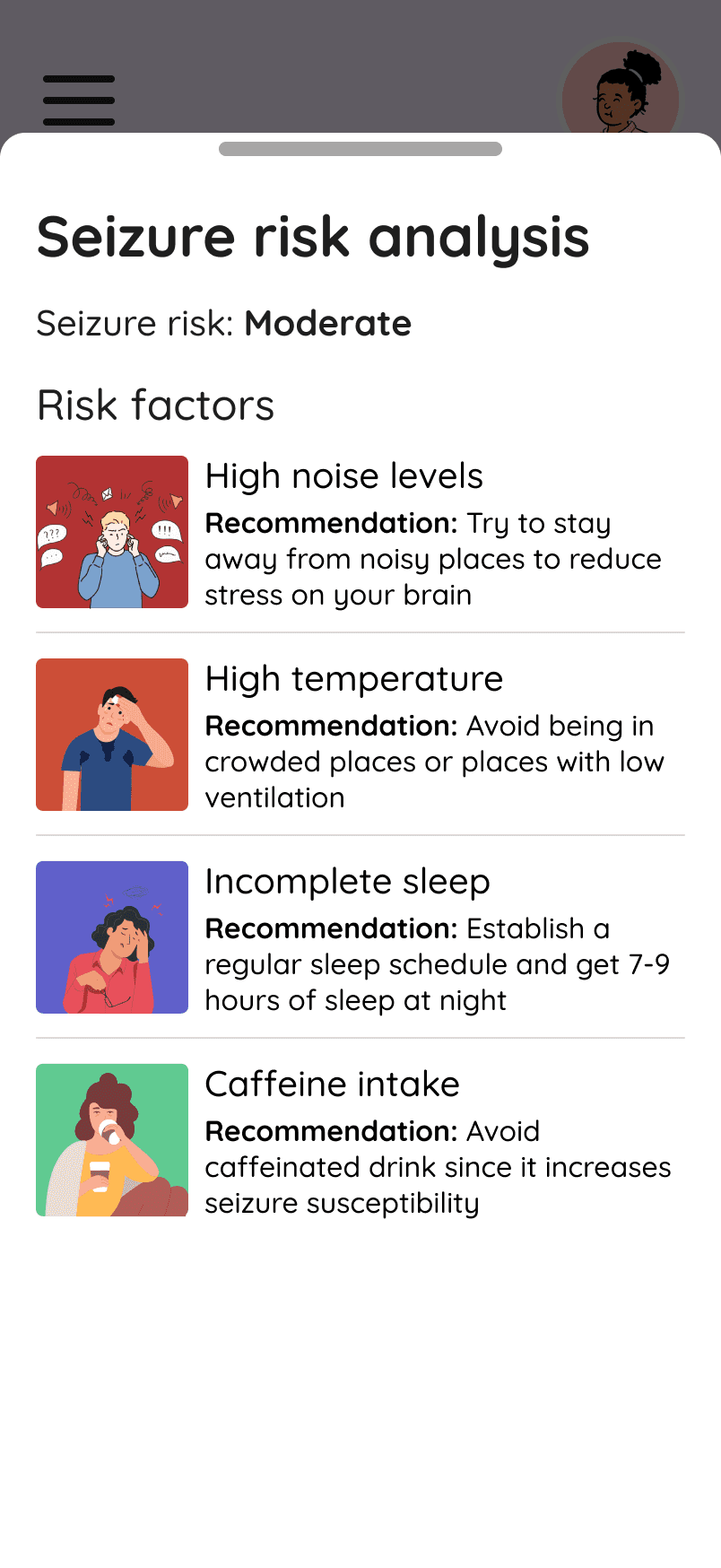
Risk analysis
A core feature of the app was utilizing available data to understand risk factors and provide an estimate of a person's current seizure risk. This nudged users to log more and more data since it provided feedback.
DESIGN
Trends
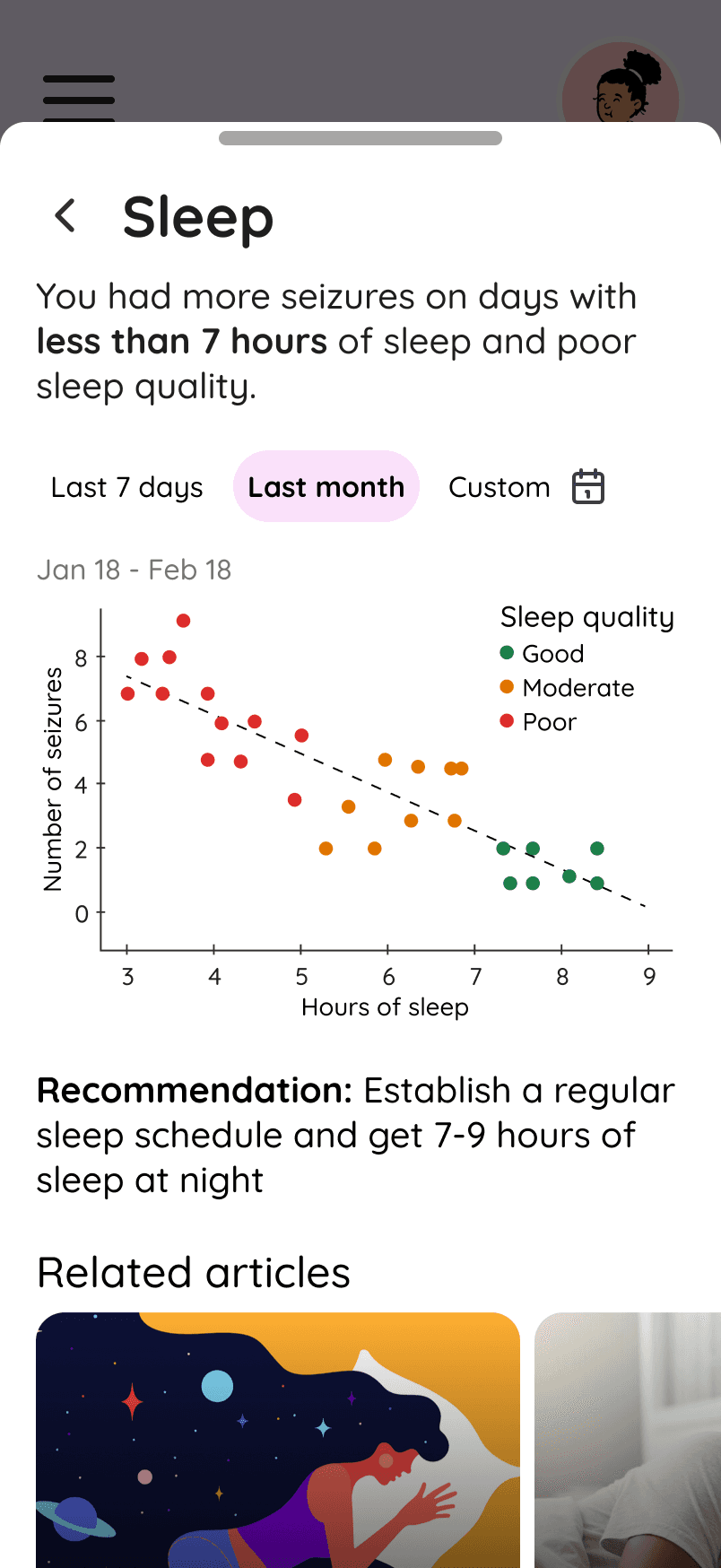
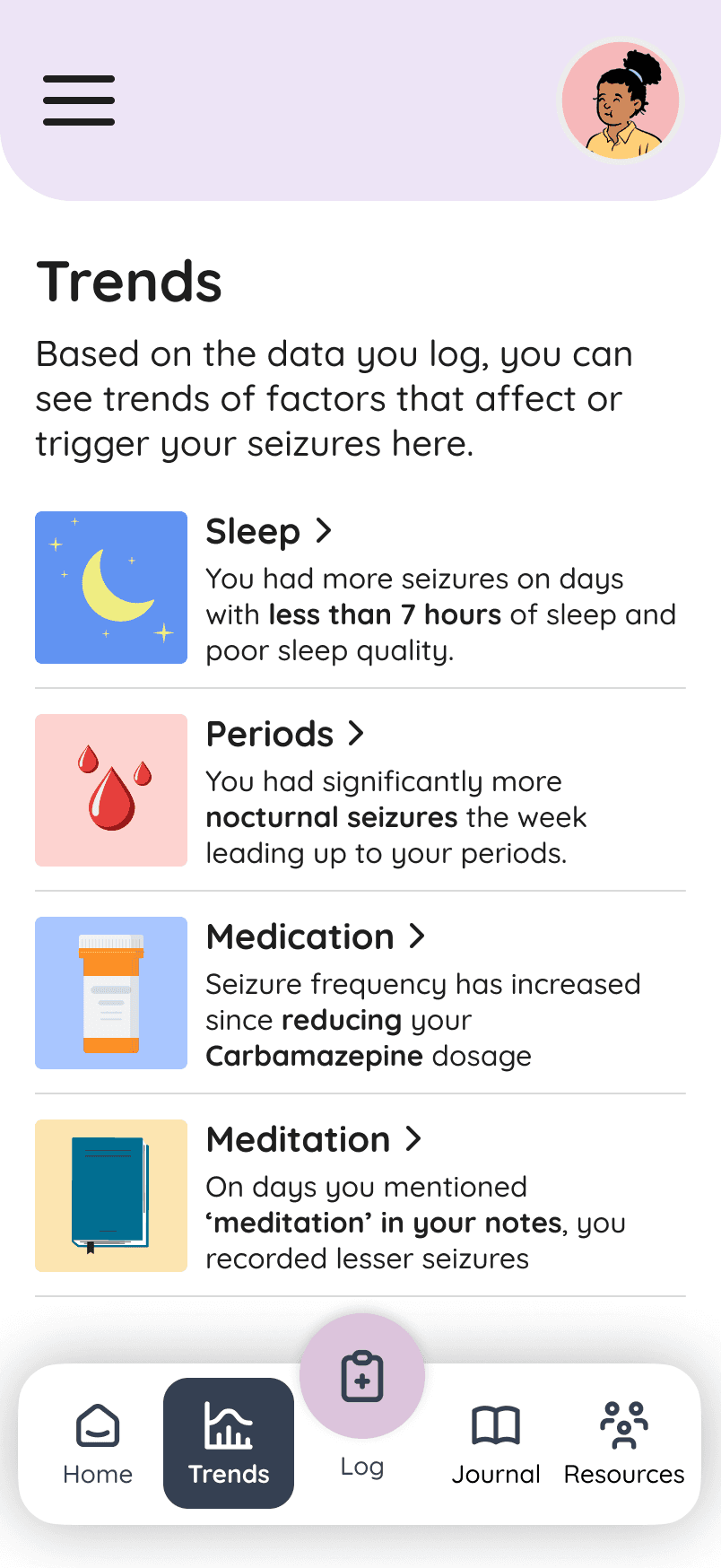
The biggest reason that users stopped logging data was because it felt pointless after a while because they weren't able to draw conclusions from it without the help of a medical professional. We created a trends section which correlated user input with common factors that affect seizures in our research to help users better understand their condition
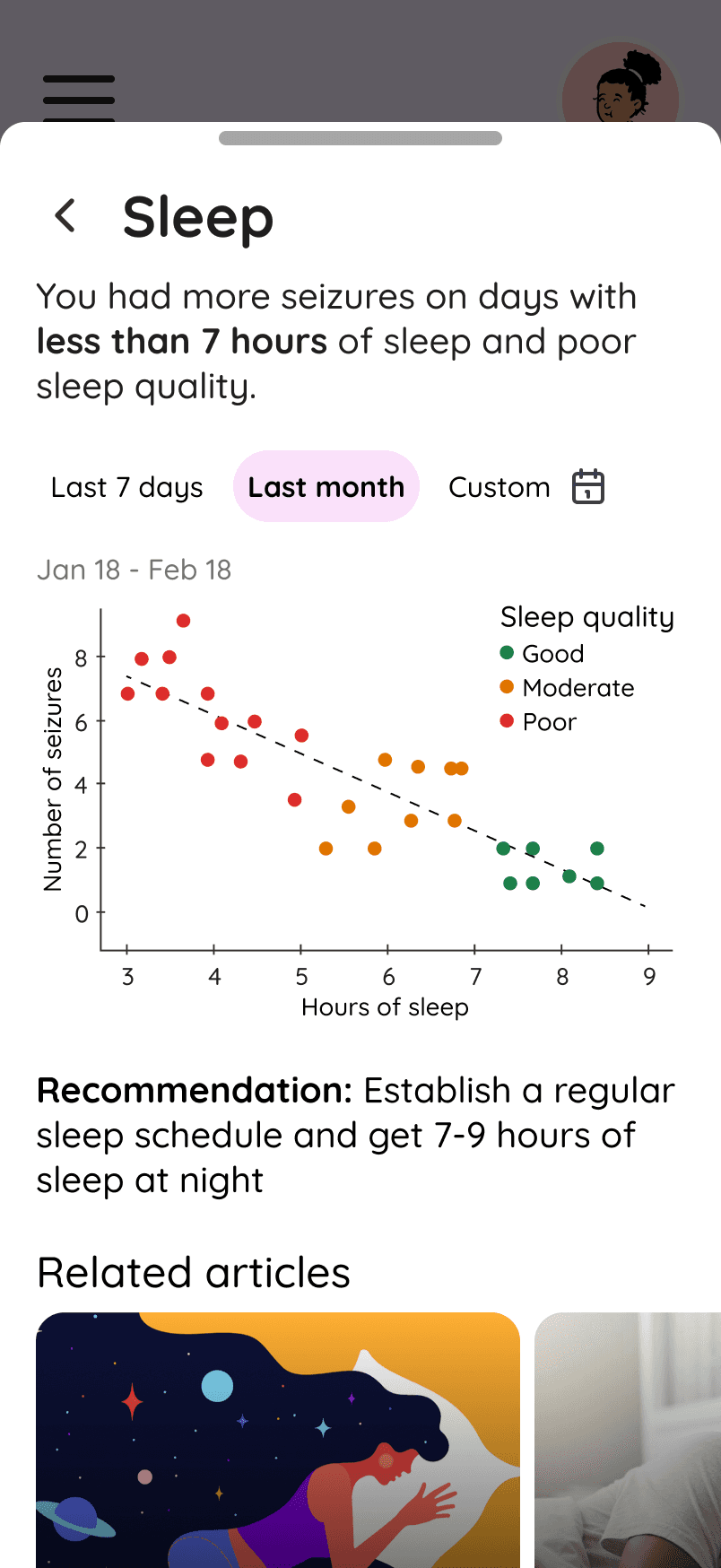
Providing trends and insights based on tracked data
Allow users to better visualize their trends and triggers and make tracking feel worth it
DESIGN
Logging
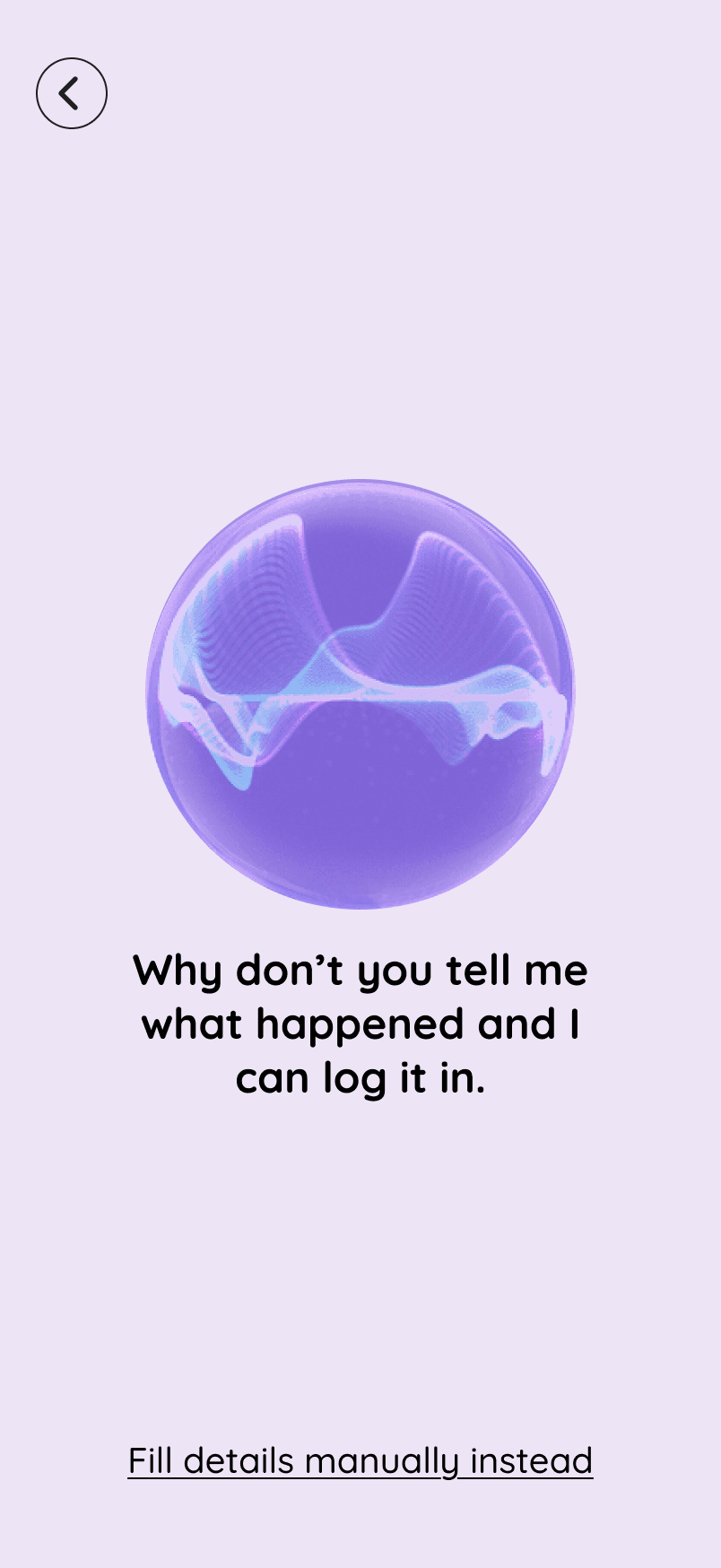
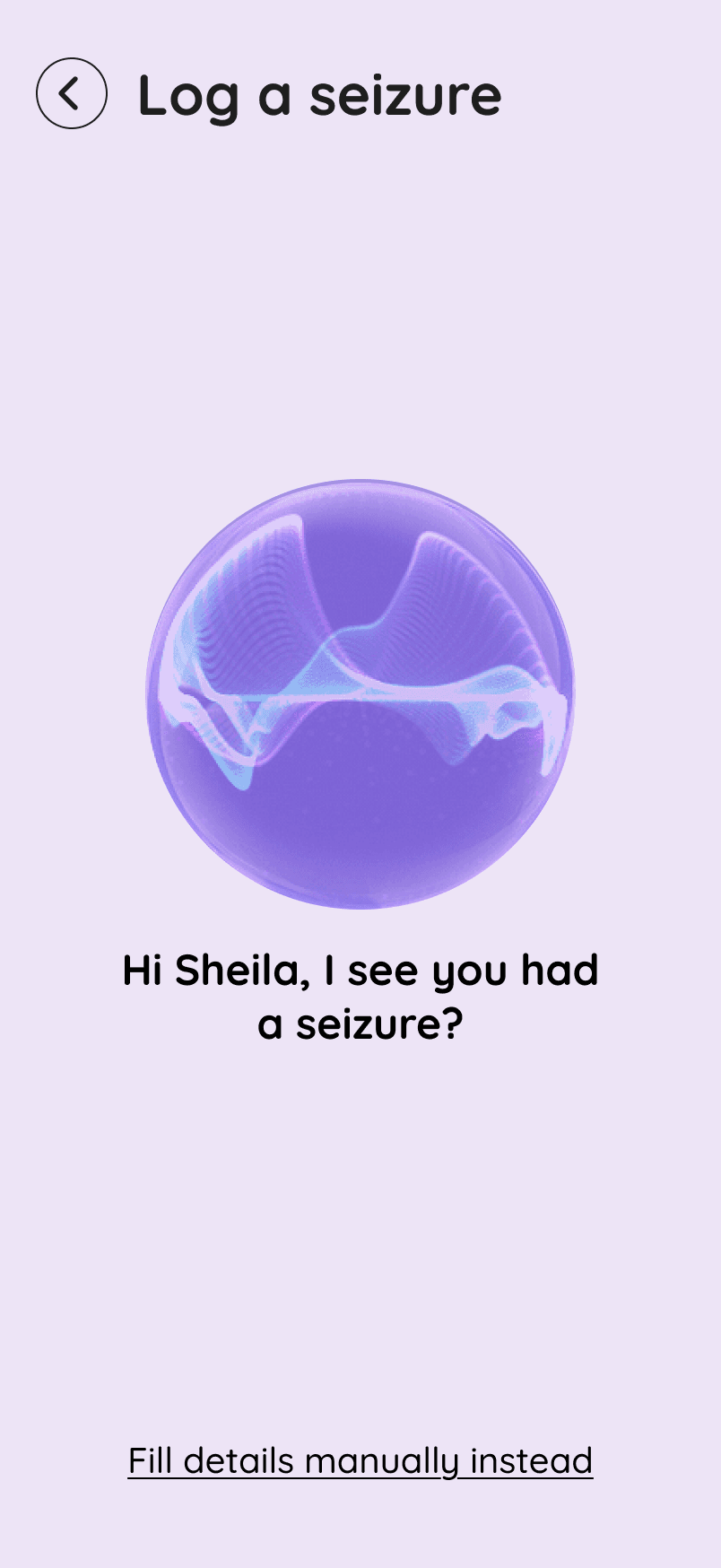
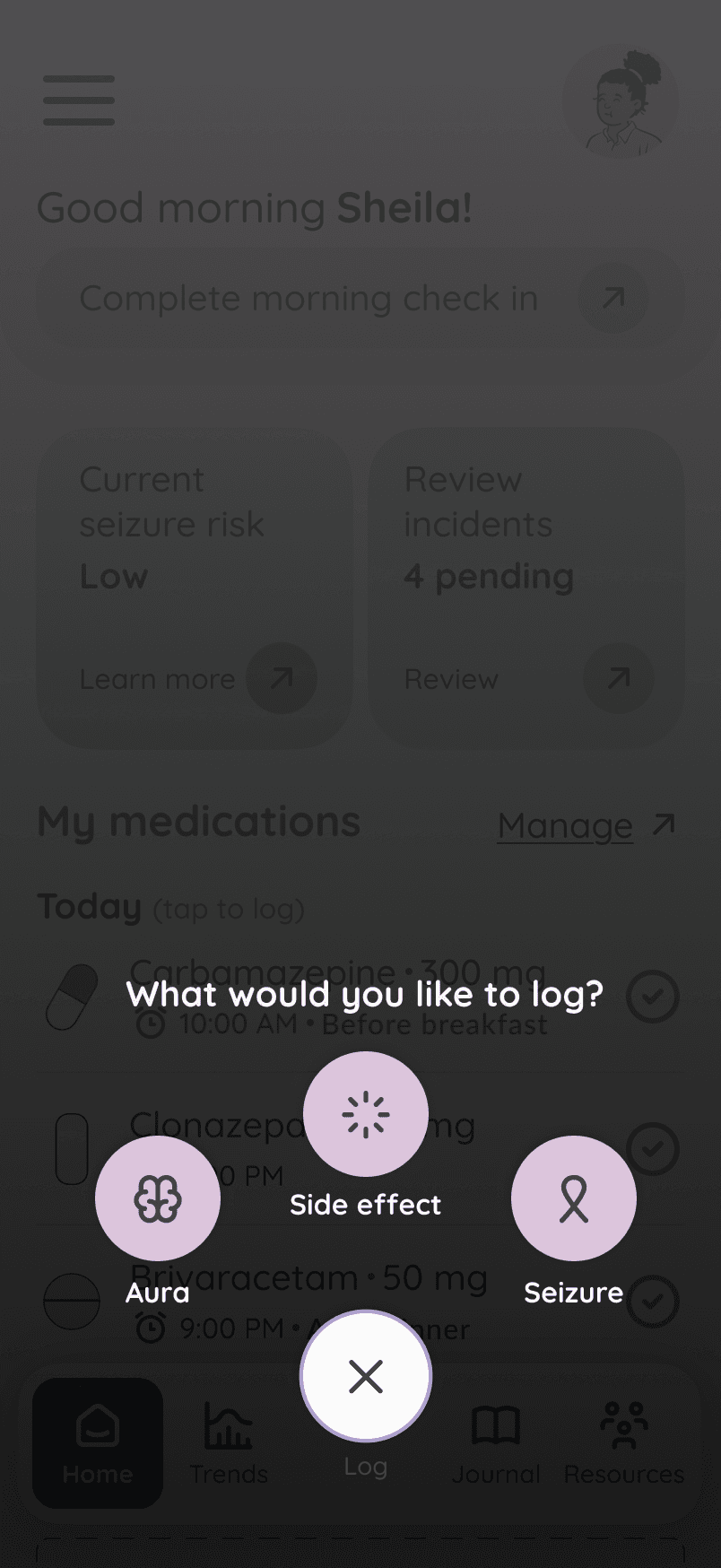
Between our survey and interviews we realized that people gave a lot more detail about their seizure episodes when they were verbally describing them. So, to gather more data we integrated an AI assistant which would interact with the user to log data. This also made data logging less tedious.
Prototype
Walkthrough
Learnings
This was my first time taking part in a design competition. Since starting my program at San Jose State, my team and I learnt a lot about research and user testing and that guidance helped us along every step of this project. I learnt about
Approaching organizations like the Epilepsy Society to find the right audience for research
FDA regulations, compliance, medical device classes
Leveraging research and strategy well in design
Pitching our product to potential investors (when we were approached after the conference)